The count you are dancing to
Salsa music is in 4/4. Dancers count two bars together as one 8-count: 1, 2, 3, 4, 5, 6, 7, 8. In every timing of salsa you take six steps in that 8-count and hold on two of the beats. What makes On2 On2 is which beat carries the break step, the step where you change direction. In On2 you break on the 2 and on the 6.
That choice is musical, not arbitrary. The conga plays a pattern called the tumbao, and its sharp slap lands on the 2 and the 6 of the 8-count (the ringing open tones that follow fall on the 4 and the 8, your holds). When your break step lands on that slap, your weight change is locked to the rhythm section of the band. This is the whole reason On2 feels "in the pocket" and why it is the timing of New York Style Mambo. If you want the long version, read What is Salsa On2.
The rule
Step on 1, 2, 3 and 5, 6, 7. Hold on 4 and 8. Break on 2 and 6. Everything else in this article is detail.
Leader footwork, count by count
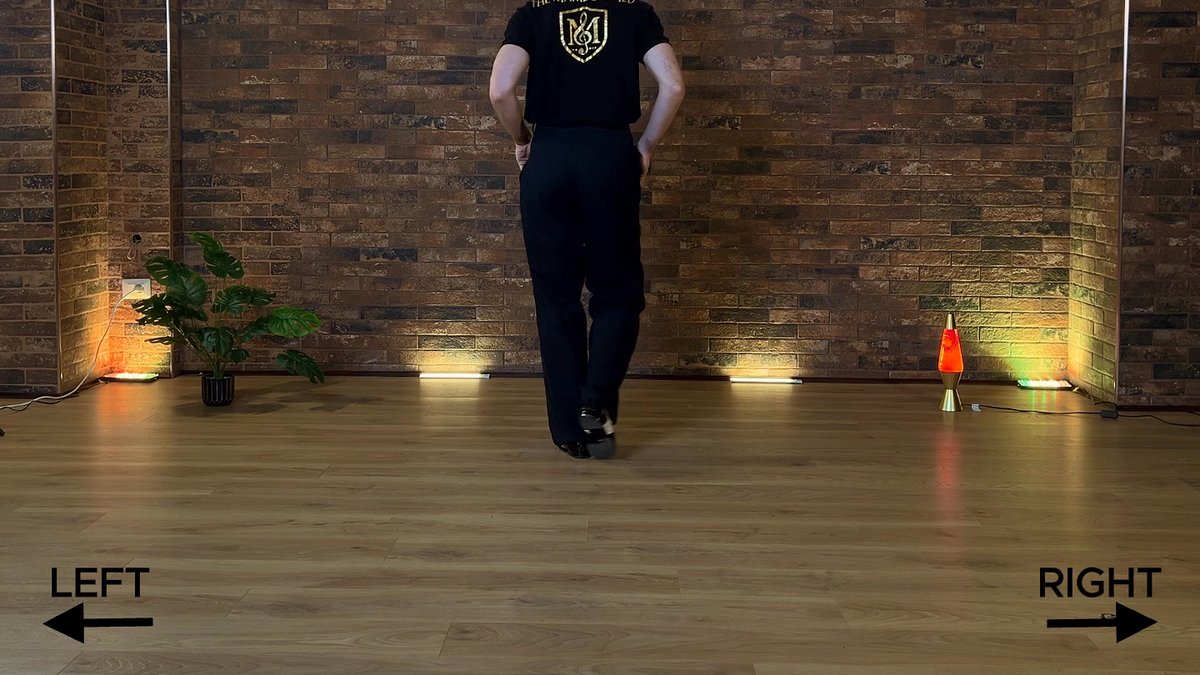
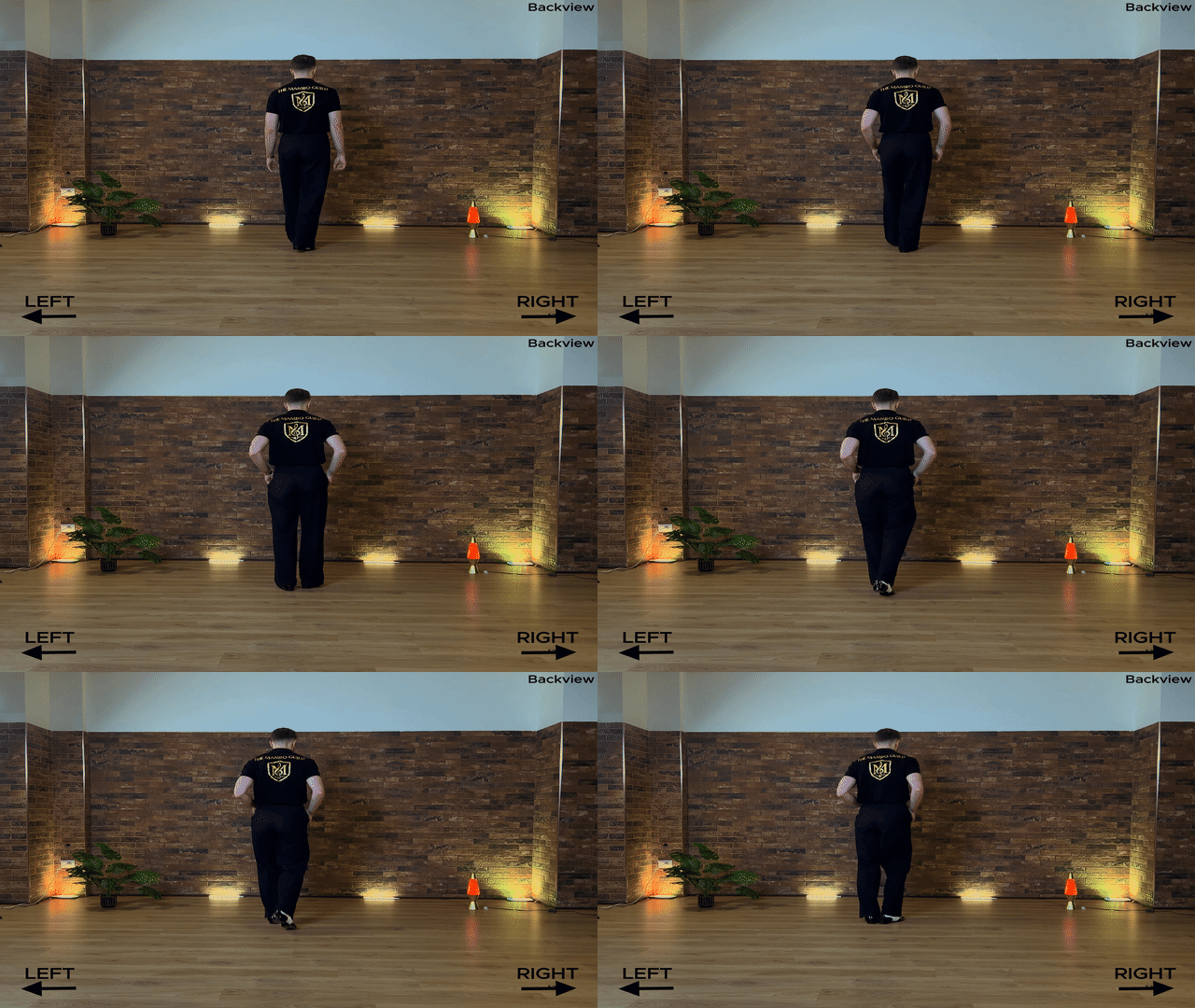
Start with feet together, weight on the right foot. This is the Eddie Torres system, the one taught in nearly every On2 school in the world:
| Count | Foot | What happens |
|---|---|---|
| 1 | Left | Small step in place, or slightly forward. Weight moves onto the left. |
| 2 | Right | Break back. The right foot steps back and takes the weight. This is the change of direction. |
| 3 | Left | Replace. Weight returns to the left foot, which has not moved. |
| 4 | Hold | No step. The right foot travels forward to close, but the weight does not change. |
| 5 | Right | Small step in place next to the left. Weight moves onto the right. |
| 6 | Left | Break forward. The left foot steps forward and takes the weight. |
| 7 | Right | Replace. Weight returns to the right foot, which has not moved. |
| 8 | Hold | No step. The left foot travels back to close. |
Notice the shape: the two "free" counts, 4 and 8, are when the foot that just broke travels back to neutral. Beginners who rush treat 4 and 8 as steps. They are not. They are the moment your weight settles before the next half.
Follower footwork
The follower mirrors the leader. Start with weight on the left foot.
- 1: right foot steps in place.
- 2: left foot breaks forward and takes the weight.
- 3: right foot replaces.
- 4: hold, the left foot travels back.
- 5: left foot steps in place.
- 6: right foot breaks back and takes the weight.
- 7: left foot replaces.
- 8: hold, the right foot travels forward.
In a partnership, the leader goes back while the follower comes forward on the 2, and the roles swap on the 6. That is why the basic looks like one unit moving together: the break steps are simultaneous and opposite.
Weight transfer: the part that separates a dancer from a stepper
A basic step with the right feet in the right places can still look wrong. The difference is how the weight moves. On the break step, place the ball of the foot first, then let the heel settle. The weight rolls through the foot instead of dropping onto it. Knees stay soft the entire time. A locked knee flattens the step into a march and kills the delay that makes On2 sit on the conga.
Two cues that fix most beginners: keep the steps small (the break step travels no further than the length of your own foot), and keep the chest quiet. If your shoulders bounce with the footwork, the step is happening in your upper body instead of your legs. The full breakdown of the mechanics is in the weight transfer and timing entries of the glossary.
The three mistakes that keep beginners off time
- Breaking on the 1. Western pop music trains your body to hit the downbeat. The fix is not more footwork, it is ear training: listen for the conga slap until you can clap it on the 2 and the 6 without counting. How to hear the 2 is the drill.
- Stepping on 4 and 8. If you take eight steps, you are dancing to the wrong count. Say the count out loud with the holds: "one two three, and, five six seven, and." Your feet stay still on the "and".
- Big steps and straight legs. A big break step forces the weight to arrive late and hard. Shrink it. Soften the knees. The step should feel like it could stop at any moment.
A 10-minute daily drill
- Two minutes, no music, counting aloud. Feet only. Slow. Fix the holds on 4 and 8.
- Three minutes at a slow tempo (around 90 BPM). Tito Puente mid-tempo recordings or Eddie Torres Big Band are the classic practice music. Keep counting aloud.
- Three minutes eyes on the mirror, chest only. Dance the basic and watch nothing but your shoulders. If they bounce, the step is too big.
- Two minutes at social tempo. Most social salsa sits between 170 and 200 BPM. Do not go here until the slow version is boring.
This drill is the first module of Salsa Footwork 101. The module after it adds the side basic and the back basic, and the one after that puts the right turn on top. Learning the basic first, in isolation, is not a beginner formality. Every turn, shine and partner pattern in Salsa On2 is built on this six-step frame, so a wobble here is a wobble everywhere.
Frequently asked questions
Which foot does the leader step with on 1 in Salsa On2?
In the Eddie Torres system the leader steps with the left foot on 1 (a small step in place or slightly forward), then breaks back with the right foot on 2. The follower mirrors this: right foot on 1, left foot breaks forward on 2.
Do you step on the 4 and 8 in On2?
No. Counts 4 and 8 are holds. The foot that just took the break step travels back toward neutral during those counts, but the weight does not change. Six steps per 8-count, never eight.
Is the On2 basic step the same as the mambo basic?
Modern Salsa On2 is the direct descendant of Palladium-era Mambo, so yes in spirit. The Eddie Torres count (1-2-3, 5-6-7 with the break on 2 and 6) is the standard taught today. Some Palladium-era dancers counted 2-3-4, 6-7-8 with the leader breaking forward on the 2; the timing is the same, the count and the direction of the first break differ.
How long does it take to learn the On2 basic?
Most beginners dance the basic musically, with confidence, after two to four weeks of short daily practice. Dancing it socially with a partner at full tempo takes longer, usually a few months. The full timeline is in How long does it take to learn salsa.
Can I practise the On2 basic without a partner?
Yes, and you should. The basic is a solo skill first. Timing, weight transfer and posture are all trained alone in front of a mirror; a partner only adds connection on top. See how to practise salsa without a partner.
Start your On2 path
The basic step, taught the way it is drilled in class.
800+ lessons, visual Skill Tree, weekly new drops. Taught by a 2x European Champion. 7-day free trial, cancel in two clicks.
Start 7-day free trial